For people working in the oil and gas sector, it is vital to understand Leak Detection and Repair (LDAR) regulations. These rules and standards aim to decrease fugitive emissions, safeguard the environment, and guarantee safety and efficacy in gas operations. Regulatory organizations like the Environmental Protection Agency (EPA) in the United States or comparable bodies within Canada are responsible for ensuring that strict rules are followed in the industry. The regulations demand routine monitoring, precise record keeping, and swift fixing of leaks in order to avoid the excessive emission of dangerous gases.
Key Takeaways:
- LDAR compliance is a regulatory and operational requirement, with federal and provincial authorities in Canada and the U.S. mandating routine monitoring, timely repairs, and detailed reporting to reduce emissions and maintain safety.
- An effective LDAR program depends on early detection, fast repairs, and trained personnel, using approved technologies and clearly defined procedures to manage leaks before they escalate.
- Accurate documentation and continuous program review are essential, as complete records, regular audits, and data‑driven improvements demonstrate compliance and strengthen long‑term operational performance.
Key Federal and Provincial LDAR Regulations
In North America, the rules governing leak identification and repairs are set by both national and regional governments. Knowing these regulations well is vital to remaining compliant and evading substantial fines or punishments.
Federal Regulations
On the federal level, the EPA’s Clean Air Act contains specific leak detection and repair regulations for different sections of the oil and gas industry. These rules require facilities to apply regular observation programs, use authorized detection methods, and fix any leaks quickly.
In Canada, the Canadian Environmental Protection Act (CEPA) has rules similar to those in the United States. It stresses the necessity of decreasing emissions from gas operations. CEPA requires frequent inspections, accurate reporting, and the adoption of the latest technology and detection and repair methods.
Provincial Regulations
Each province has its own regulatory framework, like the one set and overseen by the Energy Regulator of Alberta (AER) and the Oil and Gas Commission in British Columbia (OGC). These rules are usually based on federal guidelines but include specific demands for every province’s distinct environment and circumstances. For example, AER’s Directive 060 outlines how to conduct LDAR activities and how often, while OGC’s guide highlights the significance of thorough records and fast repairs.
Keeping up to date with rules on both national and regional levels is necessary to make sure your installation is efficient and compliant.
Building a Compliant LDAR Program: Essential Requirements for Gas Facilities
Identification and Monitoring
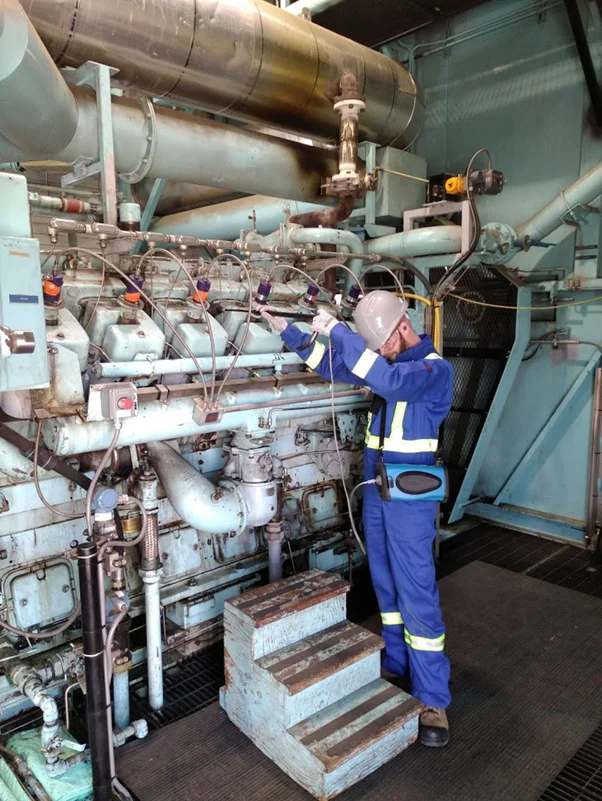
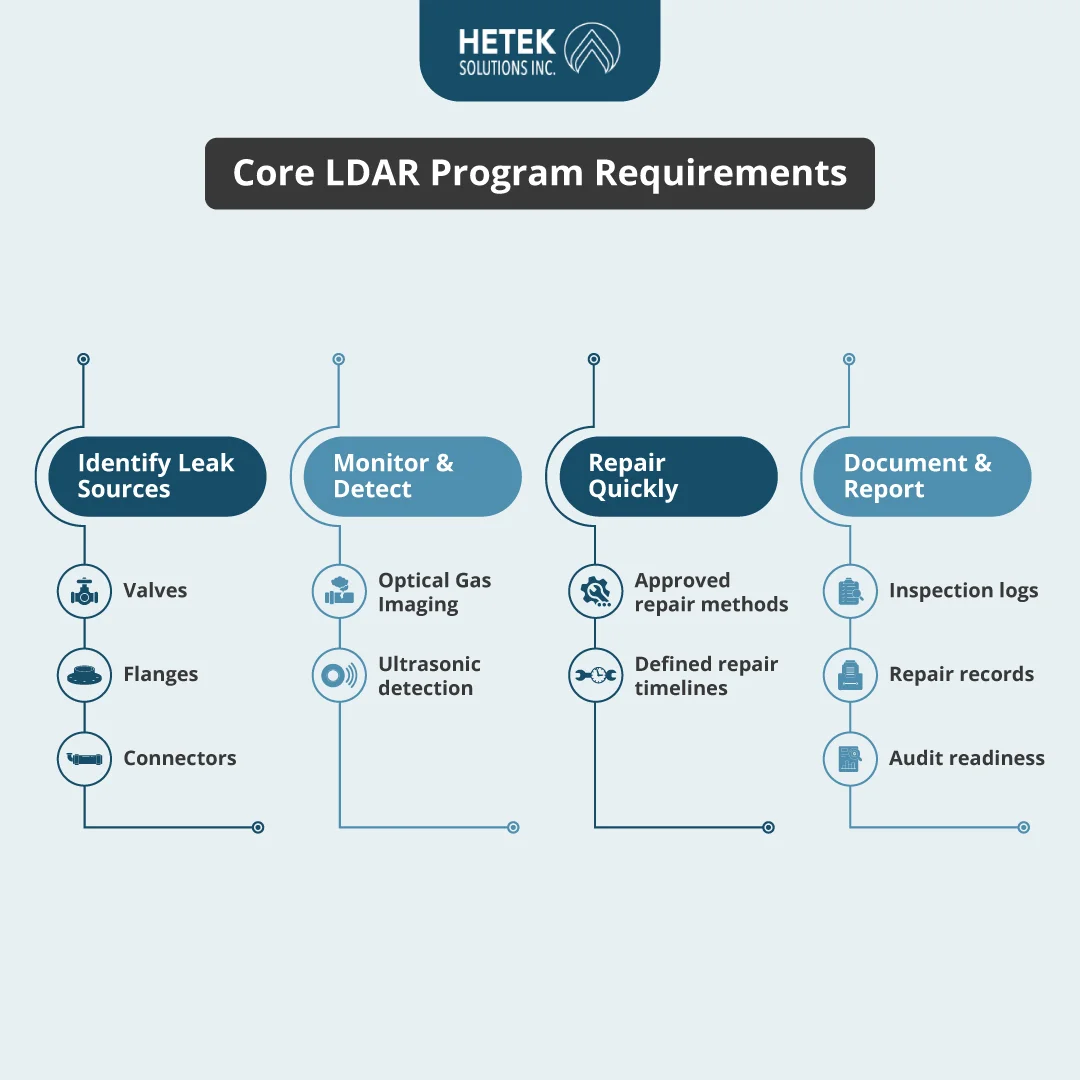
First, discover the possible leak sources inside the facility. This includes valves, flanges, connectors, and other elements that are susceptible to leaks. Regular checking through accepted detection technologies, like optical gas imaging and ultrasonic detectors, is necessary to spot leaks early on.
Repair and Maintenance
When a leak is found, it is essential to repair it quickly. Facilities should have plans in place to determine how they will manage leaks. Using approved methods to fix leaks and being ready to repair them at any time ensures that any leak is handled quickly and effectively.
Documentation and Reporting
Precise documentation is a crucial part of a compliant LDAR program. Facilities should hold complete records of each inspection, detection, repair, or maintenance job. Such documents become very important when showing compliance during regulatory audits, and also assist in monitoring the effectiveness of the program over time. Implementing robust data management systems can streamline the documentation process and ensure accuracy.
Employee Training
Training and certification of employees involved in LDAR activities are crucial for maintaining compliance. Facilities should invest resources in extensive training programs that include the most recent detection technologies, repair methods, and regulations. Constant learning helps keep staff well‑informed and able to carry out their duties efficiently.
Ensuring Documentation Accuracy in Canadian Leak Detection and Repair Programs
Properly keeping track of all details is very important to show that the LDAR requirements in Canadian leak detection and repair programs are being met. Authorities depend on complete records to confirm facilities’ adherence to set rules and control fugitive emissions.
Comprehensive Recordkeeping
All LDAR activities must be recorded. This includes inspection schedules, repair logs, and maintenance records. These records should be kept organized and accessible for periodic audits. Using digital record‑keeping systems can improve accuracy and decrease the chance of mistakes.
Regular Audits and Inspections
Self‑audits help companies find weak points that need improvement and ensure continuous adherence to regulations for leak detection and repair. Establishing a timetable for self‑auditing is important. Third‑party auditors should also be contracted to give an unbiased view of how effective your facility’s LDAR program is.
Continuous Improvement
Facilities must examine their LDAR programs often, study their performance using the data they have gathered, and make necessary changes to keep them efficient and compliant. This proactive method guarantees that the program remains effective and meets changing regulatory needs.
To sum up, knowing and following LDAR requirements is very important for people in the gas industry. If strong LDAR programs are applied, they can help gas facilities meet rules, protect the environment, and make operations more effective. Contact us today for detailed information about how Hetek Solutions can assist your facility with these requirements and improve your leak detection and repair efforts.
FAQ
What is LDAR and why is it required in the gas industry?
LDAR stands for Leak Detection and Repair, a regulatory framework designed to identify and fix gas leaks that contribute to emissions, safety risks, and operational losses. It is required to reduce fugitive emissions, protect workers and surrounding communities, and support environmental compliance. Regulatory bodies enforce LDAR programs to ensure facilities operate responsibly and consistently meet emissions standards.
How often must LDAR inspections and repairs be conducted?
Inspection frequency depends on federal, provincial, and facility‑specific requirements, with most programs requiring routine monitoring on a scheduled basis. Once a leak is identified, repairs must be completed within mandated timeframes set by the governing authority. Facilities are also required to document inspection dates, repair actions, and completion timelines for audit purposes.
What documentation is required to remain LDAR compliant in Canada?
Canadian LDAR programs require detailed records of inspections, detected leaks, repair methods, and completion dates. These records must be accurate, organized, and readily available for regulatory review or audits. Strong documentation practices also help facilities track performance trends and continuously improve their LDAR programs.