Water utilities face pressure from every direction. Aging infrastructure. Rising non-revenue water. Public accountability. Regulatory oversight. You feel it daily. Each hidden leak drains budget, capacity, and trust. That reality explains why acoustic water leak detection has become a core strategy rather than a specialty tool. It shifts response from reaction to control.
This article speaks to utility managers, engineers, field technicians, and decision-makers who want systems that perform under real conditions. You will learn how acoustic detection works, how smart telemetry supports water loss management, why training shapes outcomes, and how data confirms leaks before excavation begins. Expect practical clarity. Expect confident guidance. Expect ideas you can act on.
Because modern utilities win through insight, timing, and precision.
Key Takeaways:
- Acoustic water leak detection allows utilities to identify hidden leaks early by listening to sound patterns inside pressurized pipes before surface damage appears.
- Combining acoustic sensors with smart telemetry data strengthens leak confirmation, prioritization, and repair decisions across the network.
Trained personnel and disciplined data review turn detection technology into measurable reductions in water loss and operating costs.
What Is Acoustic Water Leak Detection
Acoustic water leak detection identifies leaks by listening to the sound energy created when pressurized water escapes a pipe. That sound travels along the pipe wall and surrounding material. Sensors capture it. Software analyzes it. Teams pinpoint leak location without excavation.
Leaks speak before they surface. Acoustic systems give utilities ears underground.
How Acoustic Loggers Work
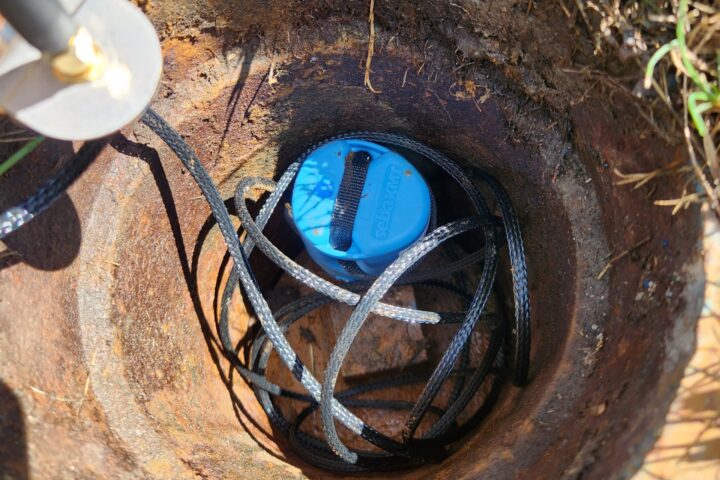
Acoustic loggers attach to valves, hydrants, meters, and fittings. They listen during low-noise periods, often overnight. Each logger records sound levels and frequency patterns over time.
Consistent noise at a fixed point suggests background flow. Repeating peaks at similar intensity suggest leakage. Software ranks these signals so crews focus on high-probability locations.
Key advantages include:
- Continuous monitoring without excavation
- Early detection before visible damage
- Scalable deployment across large zones
Loggers convert raw sound into ranked intelligence. That ranking saves time, fuel, and labour.
Correlating Sensors
Correlation technology uses two sensors placed on the same pipe section. Each sensor records the same leak noise at slightly different times. The system calculates distance based on sound velocity and time delay.
This approach narrows leak location to within meters. Crews excavate once rather than guessing.
Correlation works best when operators understand:
- Pipe material and diameter
- Distance between sensors
- Environmental noise factors
- Accurate sensor placement
Training turns correlation from theory into repeatable accuracy.
Hydrophone Technology
Hydrophones sit directly in contact with water inside the pipe. They capture internal acoustic signals rather than external vibrations. This method delivers higher sensitivity, especially in plastic pipes where sound dampening limits surface detection.
Hydrophones support:
- Detection of small leaks at low pressure
- Clear signals in noisy urban zones
- Verification of suspected leak points
Utilities deploy hydrophones strategically where surface acoustics fall short.
Smart Telemetry for Water Loss Management
Acoustic tools work best when paired with telemetry. Sound identifies leaks. Telemetry confirms impact. Together, they guide priority decisions.
Smart telemetry connects sensors to centralized platforms through secure communication channels. Data flows continuously. Alerts trigger action.
Pressure Sensors
Pressure sensors monitor fluctuations across zones. Sudden drops suggest bursts. Subtle oscillations suggest developing leaks.
Pressure data helps utilities:
- Identify stress points
- Optimize pressure management
- Reduce pipe fatigue
- Extend asset lifespan
Pressure tells the story behind the sound.
Flow Meter Integration
Flow meters measure volume moving through a network. Night flow analysis reveals baseline consumption. Deviations signal leakage.
Integrated flow data allows teams to:
- Quantify water loss
- Validate acoustic findings
- Measure repair effectiveness
- Track ROI from interventions
Numbers strengthen decision confidence.
Reservoir Level Indicators
Reservoir sensors track inflow, outflow, and storage levels. Unexpected drops indicate downstream loss. Combined with acoustic alerts, teams isolate zones quickly.
Telemetry closes the loop between detection and response.
Reduce non-revenue water with field-proven detection services
CEU Water Loss Management Training with Hetek
Technology alone does not solve water loss. People do. Training ensures systems perform as designed.
Hetek’s CEU Water Loss Management training equips personnel with practical skills that translate directly to field results.
What Personnel Learn
Participants gain clarity across detection, validation, and response:
- Acoustic principles tied to pipe materials
- Logger placement strategy
- Correlation setup and interpretation
- Telemetry data review
- Leak confirmation workflows
- Documentation standards
Training removes guesswork. Crews act with purpose.
Competency Requirements
Effective leak detection requires more than device operation. Personnel need:
- Situational judgment
- Pattern recognition
- Data interpretation
- Safe field practices
- Clear reporting discipline
Certified training aligns teams across operations, engineering, and management.
Early Leak Detection Through Data Analytics
Analytics transform signals into strategy. Acoustic hits mean little without context. Data provides that context.
Modern platforms analyze:
- Sound intensity trends
- Frequency signatures
- Pressure correlations
- Flow deviations
- Historical leak patterns
Algorithms flag anomalies worth investigating. Human expertise confirms action.
Utilities using analytics see:
- Faster response cycles
- Reduced excavation costs
- Improved repair prioritization
- Measurable reduction in water loss
Data turns listening into foresight.
Talk with specialists who design utility-scale leak programs
How Utilities Use Acoustic Patterns to Confirm Leaks
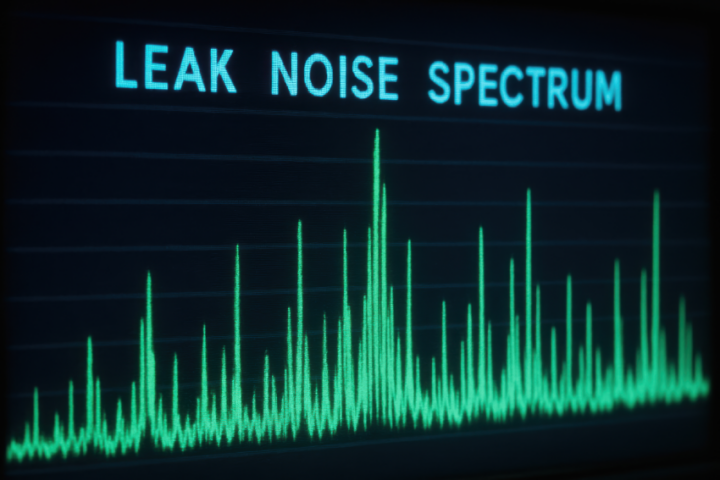
Leaks create distinct acoustic signatures. Experienced teams learn to recognize them.
Common patterns include:
- Continuous narrowband noise
- Frequency spikes consistent across nights
- Correlation timing alignment
- Pressure-linked intensity changes
Confirmation follows a structured process:
- Acoustic identification
- Telemetry validation
- Secondary verification
- Targeted excavation
This approach reduces false digs and improves repair efficiency.
FAQ
How accurate is acoustic water leak detection
Accuracy depends on pipe material, sensor placement, noise environment, and operator skill. Trained teams achieve precise localization.
Can acoustic systems detect small leaks
Yes. Early-stage leaks often generate consistent acoustic signatures before surface damage appears.
Does telemetry replace acoustic detection
Telemetry complements acoustic tools by confirming impact and priority. Both work best together.
How often should systems be reviewed
Continuous monitoring works best, supported by regular data review and field verification.