If you work around industrial gas systems, safety depends on what you know, how fast you act, and how accurately you interpret data. A gas detection certificate does more than add a credential to your resume. It proves you understand detection principles, equipment behavior, response protocols, and real-world risk conditions. In high-stakes environments, confidence comes from preparation. Certification builds that preparation into repeatable skill.
Gas incidents move quickly. Decision windows shrink. Equipment alarms trigger. Teams look for direction. A certified professional responds with clarity rather than hesitation.
Key Takeaways:
- A gas detection certificate validates a technician’s ability to operate detection instruments accurately, interpret readings correctly, and respond decisively in industrial environments.
- Certification strengthens safety performance and compliance by ensuring teams follow proven detection procedures, proper equipment handling practices, and structured response protocols.
- Field-focused training equips professionals to detect leaks faster, reduce operational risk, and support safer, more reliable gas monitoring across facilities.
Importance of Gas Detection Certification
Gas detection plays a front-line role in industrial safety. Certification ensures professionals understand how detection systems function across changing conditions. It validates your ability to read instruments accurately, assess exposure risk, and initiate appropriate response steps.
Regulators expect documented competence. Employers expect field-ready capability. Certification satisfies both expectations.
A certified technician understands:
- Gas behaviour across confined spaces and open facilities
- Sensor limitations under temperature, humidity, and pressure changes
- Alarm thresholds and escalation logic
- Response coordination across teams
Without structured training, teams rely on assumption. Assumption creates gaps. Certification closes those gaps with shared standards and verified skill.
You would not trust an untrained operator with complex machinery. Gas detection demands the same discipline.
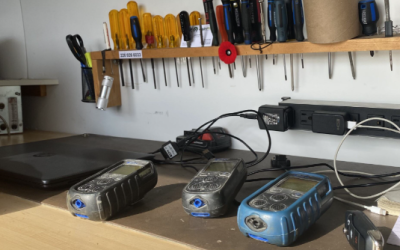
Instrument Operator Certification Including Hetek, GMI Teledyne, Honeywell, RAE
Modern gas detection relies on advanced instrumentation. Certification ensures technicians operate these tools correctly under field conditions. Instrument operator certification programs cover both theory and applied use across leading detection platforms.
Hetek certification programs align with widely used industrial detection systems from GMI Teledyne, Honeywell, and RAE. Training focuses on consistency, accuracy, and safety across operational scenarios.
Competencies Required
Certification builds a clear competency foundation:
- Understanding sensor types and detection ranges
- Recognizing cross-sensitivity risks
- Managing calibration cycles
- Interpreting alarms within operational context
Technicians gain confidence in their readings. Supervisors gain confidence in their teams.
Equipment Handling Skills
Detection instruments demand precise handling. Improper setup leads to false readings. False readings lead to poor decisions.
Certified professionals demonstrate:
- Correct start-up procedures
- Bump testing practices
- Calibration verification
- Safe storage and transport
Equipment works as designed when handled correctly. Certification ensures that reliability.
Gas Detection and Monitoring Course Overview
A professional gas detection certificate program balances structured instruction with applied learning. Knowledge without application fades. Application without foundation creates risk. Effective training integrates both.
Classroom Training
Classroom instruction establishes technical grounding:
- Gas properties and behaviour
- Detection theory
- Exposure limits and safety thresholds
- Regulatory expectations
Concepts connect directly to field application. Learning stays relevant because it ties to daily tasks.
Field Diagnostics
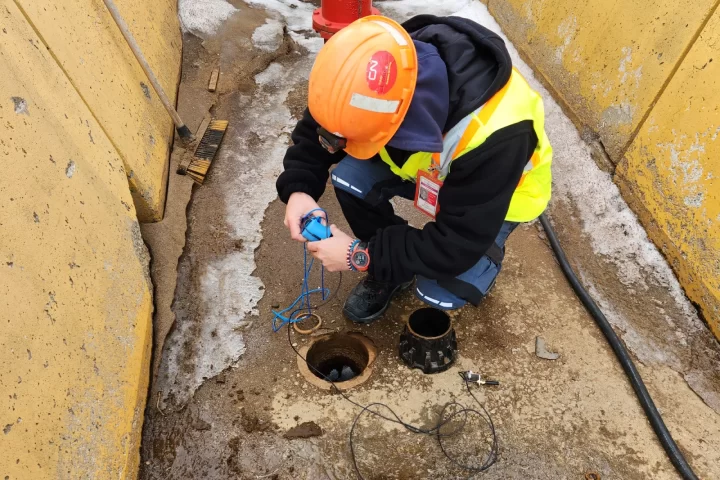
Field diagnostics translate theory into action. Trainees work with live instruments in controlled scenarios. They observe how readings change with airflow, proximity, and concentration.
Field sessions cover:
- Leak survey techniques
- Confined space monitoring
- Alarm response sequencing
- Data interpretation under pressure
This experience builds muscle memory. When conditions shift unexpectedly, trained technicians adapt.
Why Field Training Matters for Leak Detection and Monitoring
Field training separates knowledge from capability. Real environments introduce noise, interference, and complexity. Certification programs that emphasize field work prepare technicians for reality rather than ideal conditions.
A sensor may perform differently near vibrating equipment. Air movement alters readings. Ambient gases interfere with detection. Field exposure teaches technicians how to adjust.
Leak and Locating Field Courses
Leak locating courses focus on practical skill:
- Identifying likely leak points
- Confirming sources through multiple readings
- Communicating findings clearly
Certified technicians reduce response time. They reduce unnecessary shutdowns. They protect both people and assets.
Build field-ready confidence with a professional gas detection certificate designed for industrial teams.
What Practical Training Allows Technicians to Do
Practical certification changes how technicians operate in the field. They move from reaction to control.
Detect Leaks, Interpret Readings, Apply Corrective Actions
Certified technicians can:
- Detect leaks using appropriate instruments
- Interpret readings accurately across conditions
- Apply corrective actions within defined procedures
They know when readings indicate immediate danger. They know when further verification is needed. That judgment protects teams and facilities.
Training also strengthens communication. Certified professionals document findings clearly and report them effectively. This clarity supports faster decision-making across operations.
Certification Requirements and Strategic Advantages
A gas detection certificate delivers operational advantage. Certified teams demonstrate readiness during audits. They respond faster during incidents. They reduce exposure risk through informed action.
Organizations benefit through:
- Improved safety performance
- Reduced downtime
- Stronger regulatory standing
- Better workforce consistency
Certification also supports career development. Technicians gain recognized credentials. Employers gain skilled professionals who protect both people and reputation.
In competitive industrial sectors, preparedness sets leaders apart. Certification formalizes that preparedness.
FAQ
What is a gas detection certificate?
A gas detection certificate verifies that a professional has completed structured training covering detection principles, equipment operation, response protocols, and applied field diagnostics.
Who benefits from certification?
Technicians, supervisors, safety managers, and organizations working in industrial gas environments gain value through improved safety, compliance confidence, and operational clarity.
Does certification require field experience?
Programs accommodate professionals at different experience levels. Field training builds practical capability regardless of prior exposure.
How does certification support compliance?
Certified teams follow documented procedures, maintain accurate records, and demonstrate competence during regulatory review.