A leak detection and repair program is essential for companies in the gas industry to detect, quantify, and fix leaks before they cause safety risks or regulatory issues. These programs are critical for reducing harmful gas emissions, staying compliant with jurisdictional regulatory bodies (such as AER, BCER, EPA, etc.), and protecting the environment and public health. Regulatory agencies require strict adherence to LDAR (Leak Detection and Repair) protocols. If you’re in the gas industry, understanding how LDAR works isn’t optional; it’s foundational to safe and efficient operations.
Key Takeaways:
- A leak detection and repair program ensures regulatory compliance and environmental safety.
- Core components include identification, monitoring, repair, and recordkeeping.
- LDAR programs help reduce costs, improve operational efficiency, and limit emissions.
The Components of a Leak Detection and Repair Program
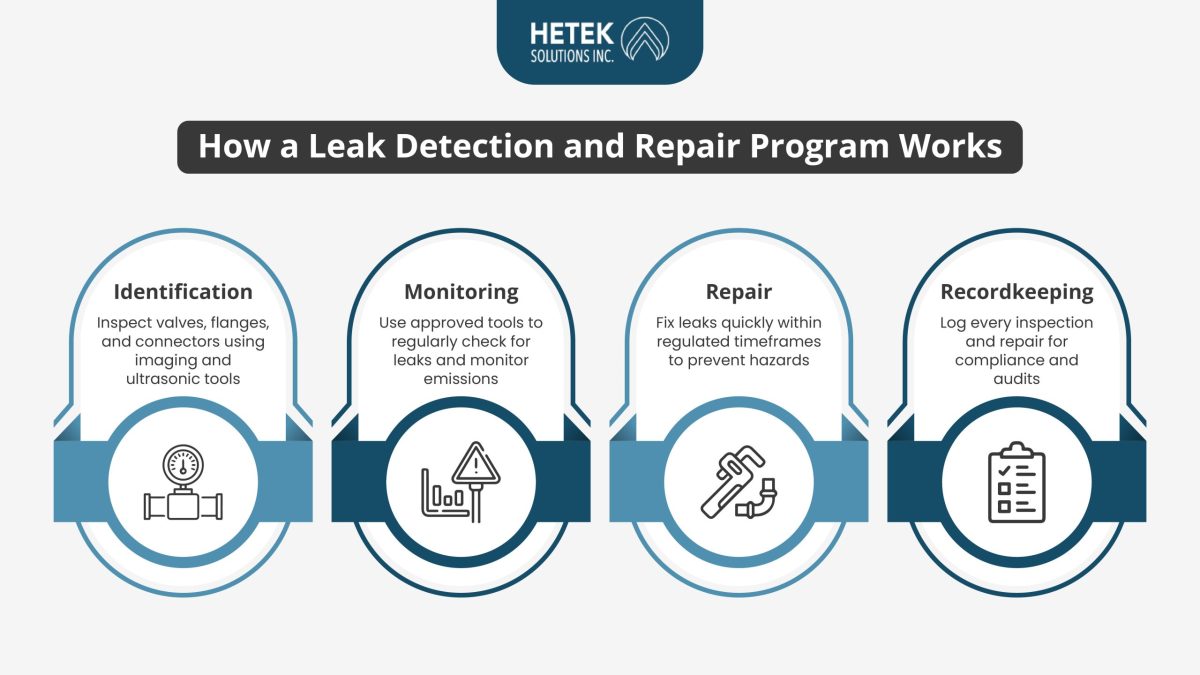
A leak detection and repair program consists of four main components: identification, monitoring, repair, and recordkeeping. These pillars form the operational backbone of any compliant gas-handling facility. Each component addresses a critical phase in emissions management, from spotting problems before they escalate to documenting every fix for accountability. Together, they help build a proactive system that prevents leaks and safeguards workers, equipment, and the environment.
Identification
The first step in an LDAR progrm is identifying and quantifying potential leak sources. This involves inspecting valves, flanges, pumps, connectors, and pressure relief devices—any part of the system where leaks are common. Tools like optical gas imaging, ultrasonic detectors, and Hetek’s advanced flow samplers allow for accurate leak detection. Proper identification sets the stage for effective monitoring and repair.
Monitoring
Monitoring is a continuous responsibility within any leak detection and repair program. Regulations require regular, scheduled inspections using EPA-approved technologies. By catching leaks early, companies avoid service disruptions and environmental violations. Instruments like portable VOC analyzers and infrared cameras help teams track emissions in real time, ensuring nothing slips through the cracks.
Repair
Once a leak is confirmed, it must be repaired promptly. LDAR regulations often set strict timelines—some as short as 5 calendar days for first attempts and 15 days for final fixes. Quick action minimizes risks, conserves resources, and restores safety. Strong maintenance protocols and trained technicians ensure repairs are timely and effective, limiting equipment wear and avoiding repeat leaks.
Recordkeeping
Detailed documentation is required for every inspection, detection, and repair. Accurate records ensure regulatory compliance and enable data-driven performance evaluations. These logs are critical during audits and help teams analyze recurring leak points. Digital tools, such as cloud-based LDAR platforms and methane deection logs, streamline this process and support long-term environmental responsibility.
The Benefits of a Leak Detection and Repair Program
A leak detection and repair program delivers measurable returns across multiple areas of business. It helps companies avoid regulatory penalties, save on costly resource losses, and improve system uptime. Just as importantly, it supports environmental goals by limiting emissions and showcasing responsible operations to the public and stakeholders.
Environmental Protection
LDAR helps reduce emissions of harmful gases, especially VOCs and hazardous air pollutants (HAPs). This limits air pollution and contributes to healthier communities and ecosystems. Real-time monitoring tools and advanced analyzers ensure emissions remain within safe limits.
Regulatory Compliance
Strict environmental laws demand measurable compliance, and LDAR programs help meet those benchmarks. Following EPA guidelines avoids fines and builds stakeholder trust. It demonstrates a company’s commitment to safe, lawful, and transparent operations.
Cost Savings
Leaks are expensive—both in lost product and potential fines. A proactive leak detection and repair program prevents product loss and reduces the need for emergency repairs. This means lower maintenance costs and more efficient use of resources over time.
Operational Efficiency
Early detection and quick repairs prevent unplanned shutdowns and minimize system inefficiencies. Regular LDAR inspections ensure all components work as expected, boosting system reliability. Technologies like handheld gas detectors and fixed monitoring sensors provide teams with immediate alerts and insights.
Turn Compliance Into a Competitive Advantage
From cost savings to environmental leadership, a leak detection and repair program can power smarter operations. See how your facility measures up.
FAQ
What Is The Purpose Of A Leak Detection And Repair Program?
The purpose is to find and fix gas leaks before they cause safety hazards or environmental violations. It’s a proactive strategy that protects people, equipment, and the planet. LDAR programs help meet compliance standards while improving overall operational performance.
How Often Should Leak Detection Be Performed?
Leak detection should follow regulatory inspection intervals, often quarterly or semi-annually. High-risk equipment may require more frequent checks. Advanced sensors and remote monitors can support continuous leak surveillance. Frequency depends on equipment type, past leak history, and compliance requirements.
What Equipment Is Needed For An LDAR Program?
Typical tools include gas analyzers, infrared cameras, ultrasonic detectors, and personal gas monitors. These help identify and measure emissions accurately and in real time. Digital recordkeeping tools and cloud-based compliance platforms are also essential.
Final Thoughts: Strengthening Safety With Every Inspection
A leak detection and repair program isn’t just a regulatory checkbox—it’s a smart business move. It helps you find gas leaks early, fix them fast, and stay compliant. The four-part structure—identification, monitoring, repair, and recordkeeping—ensures that no step is missed. LDAR programs reduce costs, support cleaner operations, and build public trust.
Start Building Your Leak Detection and Repair Program Today
It only takes one missed leak to trigger penalties or safety incidents. Let’s help you design a plan that fits your facility and regulatory needs.