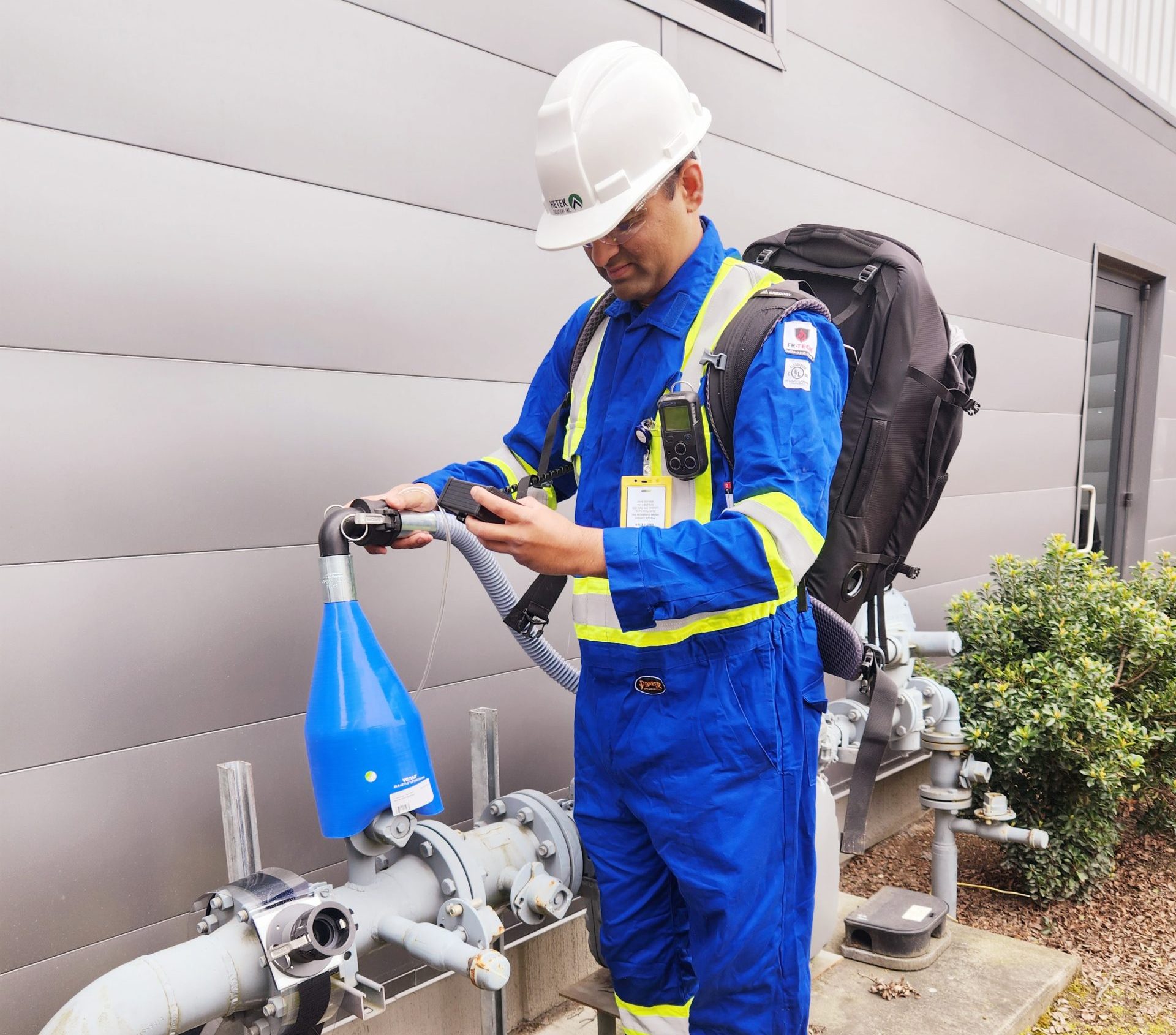
Your choice of LDAR equipment affects how well you can identify and repair equipment leaks and ensure that the leak is properly managed. The right tools help you maintain compliance with government regulations, reduce emissions, and promote worker and community safety.
In this blog post, you will learn key factors to consider when selecting LDAR equipment, such as understanding best practices, keeping up with LDAR monitoring technology, and ensuring proper maintenance of your system components. Furthermore, we’ll discuss the importance of optical gas imaging, vapor analyzers, and the role of third-party inspections to help establish an effective LDAR program.
Key Takeaways
- The right LDAR equipment helps ensure compliance, reduce emissions, and improve overall operational safety and efficiency.
- Matching LDAR technology to facility size, emission type, and budget delivers better results and maximizes return on investment.
- A successful leak detection program combines smart equipment choices, proven techniques, and best practices for long-term performance.
Significant Factors to Consider When Choosing Gas Leak Detection Tools
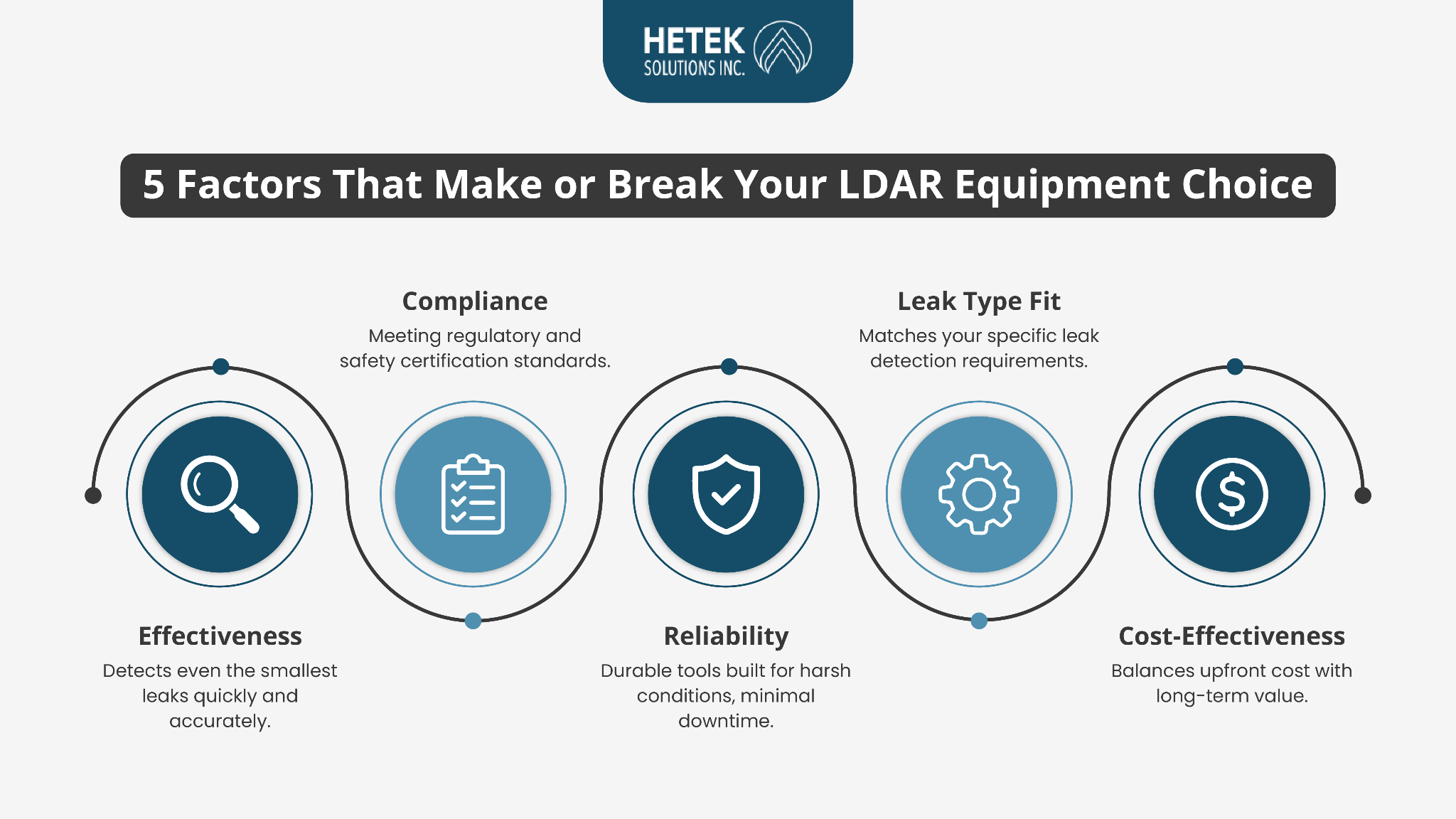
Selecting the right LDAR equipment is a critical decision that directly affects your company’s environmental compliance, operational efficiency, and overall safety. With tightening regulations and growing expectations around emissions control, the tools you choose must do more than simply detect leaks—they should support your broader objectives of sustainability, risk reduction, and cost management.
Even if you’re upgrading existing systems or starting a new LDAR program, understanding what to look for in your detection tools will help ensure your investment delivers real value. To guide you through this process, here are six significant factors to consider when evaluating gas leak detection solutions for your operations.
Effectiveness
The core goal of any LDAR program is to identify and address leaks swiftly and precisely. Your LDAR equipment should offer high sensitivity and accuracy, allowing you to detect even the smallest traces of gas before they pose a risk.
Compliance
Every tool you select must meet site-specific regulatory standards and be intrinsically safe for hazardous locations.
Reliability
Operations depend on tools that perform consistently under demanding conditions. Invest in LDAR equipment with a strong track record for durability and minimal maintenance needs.
Specific Leak Characteristics
Not all leaks are the same. Depending on the leak type, size, and location, you may need specialized detection methods or devices. Choose LDAR equipment that fits these technical requirements while factoring in safety considerations.
Cost-Effectiveness
Striking the right balance between upfront costs and long-term value is key. The right LDAR equipment will deliver strong returns by improving efficiency, reducing emissions, and supporting sustainability over time.
Need Help Maintaining Your LDAR Equipment?
Discover best practices and maintenance services that keep your leak detection systems working at peak performance.
Efficient Leak Detection: Tools, Techniques, and Best Practices
Efficient leak detection hinges on using the right mix of LDAR equipment, smart monitoring devices, and proven techniques. Today’s systems do more than identify leaks—they help safeguard operations, protect property, and support compliance with environmental regulations.
Whether you’re overseeing a commercial facility or industrial pipelines, choosing the right solutions makes a measurable difference in preventing costly damage and unplanned downtime.
Monitoring Devices
Understanding the different types of monitoring instruments is essential when selecting equipment that suits your facility’s specific needs.
Optical Gas Imaging Cameras (OGI)
OGI cameras detect infrared radiation, allowing operators to visualize emissions without direct contact. They are particularly effective in large-scale industrial operations such as refineries, petrochemical plants, natural gas terminals, and storage facilities.
Portable Gas Detectors
Portable detectors can identify very low concentrations of methane and other gases. They are typically used to inspect valves, connectors, flanges, compressors, filters, and pressure relief systems.
Detection Techniques
| Technique | Description & Application |
|---|---|
| Ultrasonic Detection | Uses high-frequency sound waves to locate leaks in hidden or inaccessible areas. |
| Thermal Imaging | Detects leaks by spotting temperature variations. Excellent for hidden leak detection. |
| Visual Inspection | Checks for visible signs like stains, corrosion, or puddles. A basic first step, limited for small leaks. |
Ensure Your Facility’s Safety and Compliance With the Right LDAR Equipment
Talk to our experts at Hetek Solutions for personalized guidance on selecting the most effective tools for your operation.
Best Practices for Leak Detection
Implementing best practices is as important as selecting the right tools. A thoughtful approach ensures maximum effectiveness, compliance, and risk reduction.
- Prioritize High-Risk Areas: Focus detection efforts where leaks could cause the most harm.
- Combine Multiple Methods: Layering technologies increases accuracy and reliability.
- Establish a Regular Inspection Schedule: Proactive inspections catch issues early.
- Train Staff: Ensure your team understands how to operate LDAR equipment and respond appropriately.
- Leverage Data Analytics: Use collected data for trend analysis and predictive maintenance.
- Document and Review Incidents: Detailed records help refine your strategy and prevent repeat issues.
Sustaining Optimal Operation: Maintaining LDAR Technology
Regular Calibration Checks
- Calibration ensures accurate readings and prevents false alarms.
- Follow manufacturer schedules and document each calibration.
Routine Maintenance and Cleaning
- Inspect sensors, cables, and housings for wear or corrosion.
- Clean lenses and filters using approved materials.
Software and Firmware Updates
- Install updates promptly to improve accuracy and security.
Operator Training
- Provide comprehensive training and periodic refreshers.
Selecting the Most Effective LDAR Equipment for Methane Leak Detection
Detection Sensitivity
- Methane detection requires equipment capable of sensing very low concentrations.
Reliability and Durability
- Choose devices that perform well in your operating environment.
Data Logging and Reporting
- Modern LDAR systems should automatically log leak data and generate compliant reports.
Ease of Use and Portability
- Lightweight, ergonomic devices reduce operator fatigue.
Compliance with Regulations
- Ensure your equipment meets all relevant standards.
Advanced Features
- Wireless connectivity
- GPS integration
- Multi-gas detection
Choosing LDAR Technology Based on Facility Size, Emission Types, and Budget
Large Facilities
- OGI cameras provide comprehensive coverage and rapid scanning.
Small Facilities
- Portable detectors offer cost-effective sensitivity.
Leak Type
- PIDs for VOCs; OGI or ultrasonic detectors for methane.
FAQ
What Factors Should I Consider When Choosing LDAR Equipment?
Consider detection sensitivity, reliability, compliance requirements, ease of use, and long-term maintenance needs.
Why Is Regular Maintenance Important?
Maintenance ensures accurate readings, prevents failures, and extends equipment lifespan.
Conclusion
Selecting LDAR equipment is just the beginning. With proper maintenance, training, and continuous improvement, your organization can achieve safer, more efficient, and compliant operations.
Not Sure Which LDAR Solution Fits Your Facility?
Let Hetek Solutions help you assess your needs and recommend the ideal technology for your gas detection program.